


ADThis guide contains affiliate links — if you buy through them we may earn a small commission at no extra cost to you. It never affects what we recommend. How we choose products
Need expert help now? Find an RCVS-verified exotic vet near you.
Most pets are legal in the UK — far more than people realise. The UK uses what lawyers call a "negative list" approach: an animal is legal to keep unless a specific law bans it. That means dogs, cats, rabbits, hamsters, bearded dragons, axolotls, sugar gliders, and even capybaras are all fine to own without a single piece of paperwork.
This guide is the plain-English version of UK pet law as it stands in 2026. It covers the four categories every prospective owner needs to understand: common pets, exotic pets without a licence, species that need a Dangerous Wild Animals Act (DWA) licence, and the roughly 30 species that are completely banned. We've cross-checked every claim against GOV.UK and legislation.gov.uk so you don't have to.
Quick Answer
Quick Answer: The UK lets you keep almost any pet unless a law says otherwise. Legal without a licence: dogs, cats, rabbits, hamsters, ferrets, chinchillas, most reptiles (bearded dragons, leopard geckos, corn snakes), birds (budgies, cockatiels, parrots), axolotls, sugar gliders, tarantulas, tropical fish. Needs a DWA licence (£200–£500): venomous snakes, big cats, crocodilians, large constrictors, and from 6 April 2026 all primates. Banned outright (30+ species): raccoons, red-eared sliders, American mink, Siberian chipmunks. Find an exotic vet near you →
📋 Table of Contents
- How UK Pet Law Works (the Negative List)
- Common Pets That Are Always Legal
- Exotic Pets Legal Without a Licence
- Pets That Need a DWA Licence
- The 2026 Primate Licence Rule
- Pets Regulated Under CITES
- Pets That Are Completely Banned
- What About Renting and Leasehold?
- How to Choose a Legal Pet Responsibly
- Why Specialist Vet Access Matters
- Frequently Asked Questions
How UK Pet Law Works (the Negative List)
The UK has no single "approved pets" list. Instead, four pieces of legislation work together to decide what you can keep:
- The Animal Welfare Act 2006 — applies to every vertebrate kept as a pet. You commit an offence if you fail to provide a suitable diet, environment, social needs, and protection from suffering. This is the law that underpins the RSPCA's prosecutions and the standard for "is your setup legal?"
- The Dangerous Wild Animals Act 1976 (DWA) — lists species considered dangerous to the public. Owning one requires a council-issued licence and approved enclosure.
- The Invasive Alien Species (Enforcement and Permitting) Order 2019 — implements Retained Regulation (EU) 1143/2014 and bans 30+ species considered an environmental threat.
- CITES (Convention on International Trade in Endangered Species) — governs imports and trade in endangered animals. Doesn't ban ownership, but heavily regulates it.
If a species is silent in all four pieces of legislation, it is legal. That's why so many "weird" pets — capybaras, octopuses, fennec foxes, red foxes, sugar gliders — are perfectly legal in Britain without any paperwork.
For a deeper dive on the law itself rather than the pet list, see our full UK exotic pet legal guide.
Common Pets That Are Always Legal
These are the household animals that most British families already own. None require a licence, and all are covered by the Animal Welfare Act 2006 baseline duty of care.
If you're looking for a dependable mammal that's both popular and licence-free, the chinchilla species profile and our chinchilla care guide are the most read entries on BritExotics for a reason — they're soft, sociable, and live up to 20 years.
 Illustrative imageOur pick · checked August 2026ADYaheetech 175cm 3-Tier Small Animal CageSpacious multi-level design with 1.3cm bar spacing — the welfare-first choice for chinchillas and degus who need vertical climbing room.Available at Amazon →
Exotic Pets Legal Without a Licence
Here is where most people are surprised. The vast majority of "exotic" species you see on Instagram or in specialist pet shops are perfectly legal to keep in the UK with no permit, no inspection, and no annual fee. They're still covered by the Animal Welfare Act 2006, so the law assumes you understand their needs — but legally, the only barrier between you and ownership is your wallet and your common sense.
Reptiles (no licence)
- Bearded dragon — most popular UK lizard, hardy and handleable
- Leopard gecko — small, low-light, beginner-friendly
- Crested gecko — arboreal, no UVB needed
- Corn snake — UK keeper's #1 starter snake
- Ball python (Royal python) — calm, slow-moving constrictor
- Blue-tongued skink, kingsnake, milk snake, common boa, Hermann's tortoise (with CITES Article 10), red-footed tortoise, common chameleon
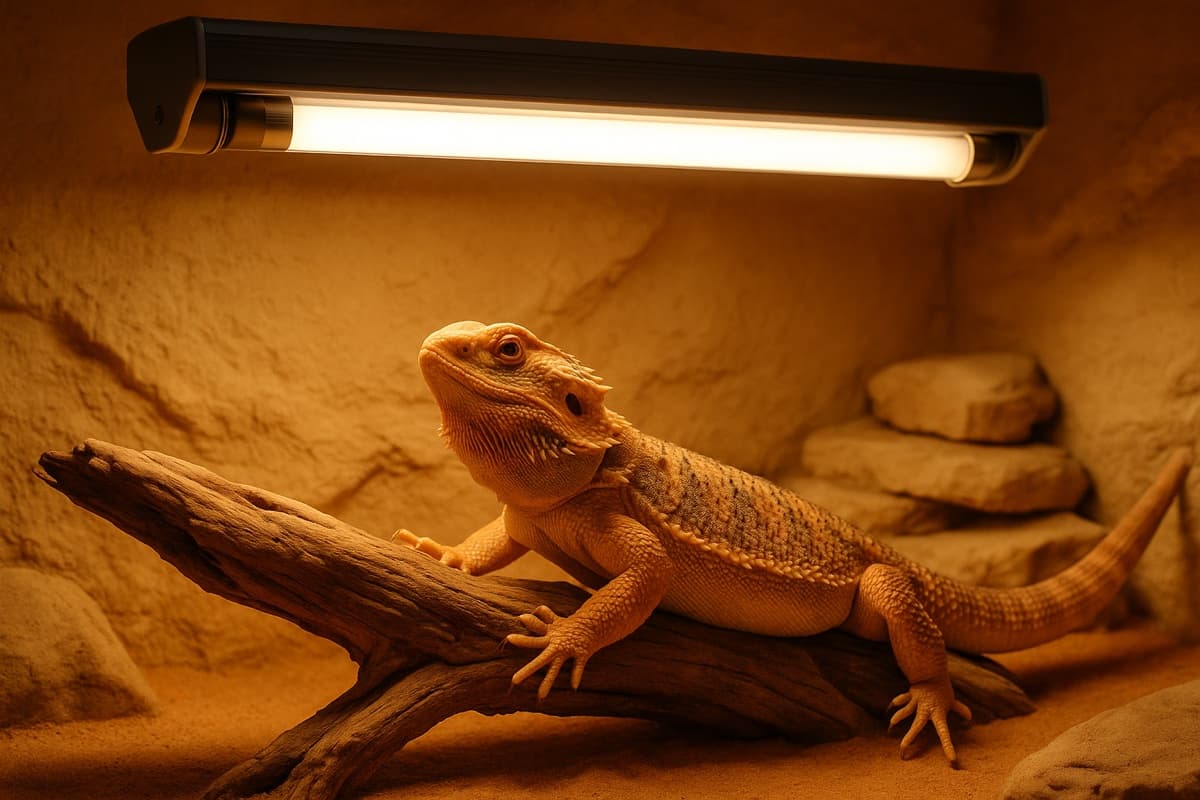 Illustrative imageOur pick · checked August 2026ADArcadia Pro T5 UVB Kit 24W 14%The T5 UVB tube recommended by UK reptile vets — correct 14% output for desert species like bearded dragons, runs cooler than older T8 kits.Available at Amazon →
Amphibians (no licence)
- Axolotl — Mexican aquatic salamander, perpetually juvenile
- Fire-bellied toad, African dwarf frog, Pacman frog, Cuban tree frog (note: cane toads need careful sourcing — see CITES section below)
Birds (no licence)
- Budgerigar — entry-level talking bird
- Cockatiel, Canary, Lovebird, Conure, Indian ringneck, Quaker parakeet (legal since 2020), Macaws, Cockatoos
- African Grey parrot — CITES Appendix II (Article 10 certificate required)
 Illustrative imageOur pick · checked August 2026ADYaheetech Large Parrot Cage with Play TopLarge-format cage rated for African Greys and macaws — bar spacing, door locks and pull-out tray all check out for welfare standards.Available at Amazon →
Small mammals (no licence)
- Chinchilla, Degu, African pygmy hedgehog
- Sugar glider — legal but with significant welfare concerns
- Ferret, Capybara (no DWA listing — surprisingly legal but huge welfare needs)
Invertebrates (no licence)
- Tarantulas (most species), scorpions (non-medically significant species), praying mantises, stick insects, giant African land snails (note: now banned in some EU states under IAS — UK still permits, but check current GOV.UK guidance), millipedes
 Illustrative imageOur pick · checked August 2026ADExo Terra Nano Glass Terrarium 20cmFront-opening glass nano for tarantulas, mantids and small geckos — tight lock, ventilated lid, sized for any shelf.Available at Amazon →
For a longer ranked list with care difficulty and budgets, see our 50+ exotic pets without a licence guide and our best first exotic pet for UK beginners breakdown.
Pets That Need a DWA Licence
The Dangerous Wild Animals Act 1976 lists species the UK Government considers a public-safety risk. Ownership is not banned — but you must hold a council-issued licence, which typically costs £200–£500 for the application and runs for two years. You'll also need:
- A purpose-built enclosure that survives a council inspection
- Public liability insurance (often £500–£1,500/year)
- Vet sign-off on the welfare standards
- Annual inspections in most local authorities
Common DWA-scheduled species include:
- Big cats: caracal, ocelot, serval, lynx, cheetah
- Wild canids: wolves, wolf hybrids beyond F4, dingos
- Mustelids: wolverines, otters of certain species
- Venomous snakes: rattlesnakes, cobras, mambas, vipers, sea kraits
- Large constrictors: reticulated python, Burmese python, anaconda, African rock python
- Crocodilians: all crocodile and alligator species
- Large primates (still under DWA in addition to the new 2026 primate licence)
Full breakdown of fees and applications: DWA licence cost UK 2025 and Dangerous Wild Animals Act UK 2025.
The 2026 Primate Licence Rule (Important if You're in England)
This is the most significant change to UK pet law in over a decade.
From 6 April 2026, the Animal Welfare (Primate Licences) Regulations 2025 require every primate keeper in England to hold a primate licence issued by their local authority. The rule applies to:
- Marmosets and tamarins
- Capuchins
- Lemurs
- Bush babies (galagos)
- Squirrel monkeys
- Any other primate species, regardless of size
Key facts every existing or prospective primate owner should know:
- Pet-shop conditions are no longer enough. Licence standards are based on zoo-equivalent welfare — group housing, enrichment, climate, veterinary access.
- Existing keepers must apply. There is no "grandfathering" of unlicensed primates after 6 April 2026.
- Penalties are unlimited. Keeping a primate without a licence after the deadline is a criminal offence carrying an unlimited fine and potential imprisonment.
- Wales, Scotland, and Northern Ireland are following. Devolved equivalents are in development; check your local authority before assuming the England-only rule applies.
The RSPCA and Born Free both recommend against keeping primates in private homes regardless of legality. Captive primates have complex social, dietary, and psychological needs that domestic settings struggle to meet — and they cannot be safely returned to the wild if the owner can no longer cope.
For the species-specific implications, see Can you own a monkey as a pet in the UK?.
Pets Regulated Under CITES
CITES (the Convention on International Trade in Endangered Species) doesn't ban ownership — it controls trade. If you buy a pet listed under CITES, you must receive an Article 10 certificate (yellow form) confirming the animal was legally bred or imported. The certificate must accompany the animal for life. Sale without the certificate is a criminal offence under the Control of Trade in Endangered Species Regulations 2018.
Common CITES-listed pets:
- Tortoises: Hermann's, Spur-thighed, Marginated (all Annex A — yellow Article 10 required)
- Birds: African Grey, all macaws, certain cockatoos, falcons, eagles, owls
- Reptiles: Boa constrictors (some subspecies), Indian python (Annex A)
- Marine: Queen conch, certain coral species
Always ask the breeder for the Article 10 certificate before paying. If they can't produce it, walk away — you'll face the prosecution risk, not them.
Pets That Are Completely Banned
These species are illegal to keep, breed, sell, transport, or release in the UK under the Invasive Alien Species (Enforcement and Permitting) Order 2019. There is no licence available — no zoo licence, no DWA permit, nothing. The penalty is up to two years' imprisonment and an unlimited fine.
The most commonly searched banned species:
- Raccoons (Procyon lotor) — banned since August 2016
- Red-eared slider turtles (Trachemys scripta elegans) — banned 2016; existing pets owned before then can be kept but not sold or bred
- American mink (Neogale vison)
- Siberian chipmunk (Tamias sibiricus)
- Pallas's squirrel (Callosciurus erythraeus)
- Reeves' muntjac deer (Muntiacus reevesi)
- Coati (Nasua spp.)
- Indian house crow and ruddy duck
- Sacred ibis
- Yellow-bellied slider and Cumberland slider (added with red-eared slider)
- Egyptian goose and Canada goose (release prohibited)
- Plus 20+ further plants and aquatic species
The full list is maintained by the GB Non-Native Species Secretariat. It changes — usually in the direction of more bans — so check before buying any unusual species.
If you encounter someone selling a banned species (often online or at swap-meets), report it to:
- GB NNSS: 0800 030 4777 / [email protected]
- Local police: 101 (non-emergency)
- APHA (Animal & Plant Health Agency) for trafficking suspicions
What About Renting and Leasehold?
UK pet legality and your right to keep one in your home are two different questions. Legality is set by Parliament; whether you can keep the pet is a contractual matter with your landlord, freeholder, or housing provider.
Two recent changes are worth knowing:
- Renters' Rights Act 2024 (in effect from 1 May 2026 in England): Landlords can no longer unreasonably refuse a tenant's request to keep a pet. They can require pet insurance and apply reasonable conditions, but a blanket "no pets" clause is no longer enforceable in most assured tenancies.
- Microchipping: Cats join dogs as a legal microchip requirement (in force since June 2024). Failure to microchip carries a £500 fine.
Leasehold flats often have stricter pet covenants written into the lease — these are not affected by the Renters' Rights Act. Always check your lease or tenancy agreement before bringing any animal home, exotic or not.
How to Choose a Legal Pet Responsibly
Legality is the floor, not the ceiling. The fact that you can keep a sugar glider, a capybara, or an octopus doesn't mean you should. When deciding which legal pet suits your life, work through this in order:
- Lifespan. A bearded dragon lives 8–12 years. A chinchilla can reach 20. A cockatiel lives 15–25. African Greys regularly reach 50. Match the commitment to your life-stage.
- Space & climate. UK summers are mild, but climate change is producing 30 °C+ heatwaves that are dangerous for chinchillas, rabbits, and many reptiles. See reptile heating costs UK winter for the energy-bill side.
- Specialist vet access. Most ordinary GPs cannot treat a parrot, lizard, or invertebrate. Use our exotic vet finder to confirm specialist coverage in your postcode before you buy.
- Cost. A £30 leopard gecko costs £400+ to set up properly. Annual exotic vet bills range £80–£300. Lifetime costs for a parrot easily exceed £15,000.
- Welfare evidence. The RSPCA's exotic pet welfare guidance and the BVZS exotic pet position statements are the gold standard for whether a species genuinely thrives in captivity.
Compare options side-by-side in our best exotic pets UK 2026 ranking.
 Illustrative imageOur pick · checked August 2026ADThlevel Digital Twin-Probe Thermometer & HygrometerOne unit reads hot spot, cool side and humidity simultaneously — the first thing to buy before any exotic setup.Available at Amazon →
Why Specialist Vet Access Matters
Owning a legal pet does not mean every vet can treat it. The Royal College of Veterinary Surgeons (RCVS) Specialist register lists fewer than 100 veterinary surgeons in the UK with formal exotic specialism. For most owners, the realistic standard is a "general practice with exotic interest" — clinics where one or more vets have completed continuing-professional-development courses in reptiles, birds, or small mammals.
Our directory tags every clinic by species coverage and emergency status:
- Find an RCVS-registered exotic vet near you
- Reptile vet near me — UK guide
- Snake vet near me — UK guide
- How to find an avian vet in the UK
For out-of-hours crises, our 24/7 exotic emergency vet finder lists the clinics confirmed to take exotic emergencies overnight and at weekends. Save the page now — you don't want to be Googling at 3 a.m. with a hypothermic gecko.
 Illustrative imageOur pick · checked August 2026ADF10 Germicidal Barrier Ointment 100gThe wound-care ointment exotic vets reach for first — F10 formula used in avian and reptile practices across the UK. Worth having before you need it.Available at Amazon →
Frequently Asked Questions
Frequently Asked Questions
What pets are legal in the UK without a licence?
What pets are illegal in the UK?
Do you need a licence to own a pet in the UK?
Are exotic pets legal in the UK?
What is the most unusual legal pet in the UK?
Can you keep a monkey as a pet in the UK in 2026?
Still deciding what's right for you? Run the species through our exotic pet finder directory, check that there's a specialist exotic vet near you, and bookmark our 24/7 emergency vet page before the animal arrives. Legality is the easy part — what matters is whether you can give the animal a life that meets the Animal Welfare Act standard, year after year.
More guides: Exotic Pets Without a Licence UK · Best First Exotic Pet for Beginners · UK Exotic Pet Legal Guide · Dangerous Wild Animals Act UK 2025
Find Exotic Vets & Resources

Want more expert tips like this?
Download your free Exotic Pet Starter Guide and make sure your setup is right from day one.
Related Guides
Written by: BritExotics Editorial Team
Updated May 4, 2026