

ADThis guide contains affiliate links — if you buy through them we may earn a small commission at no extra cost to you. It never affects what we recommend. How we choose products
Need expert help now? Find a listed exotic vet near you.
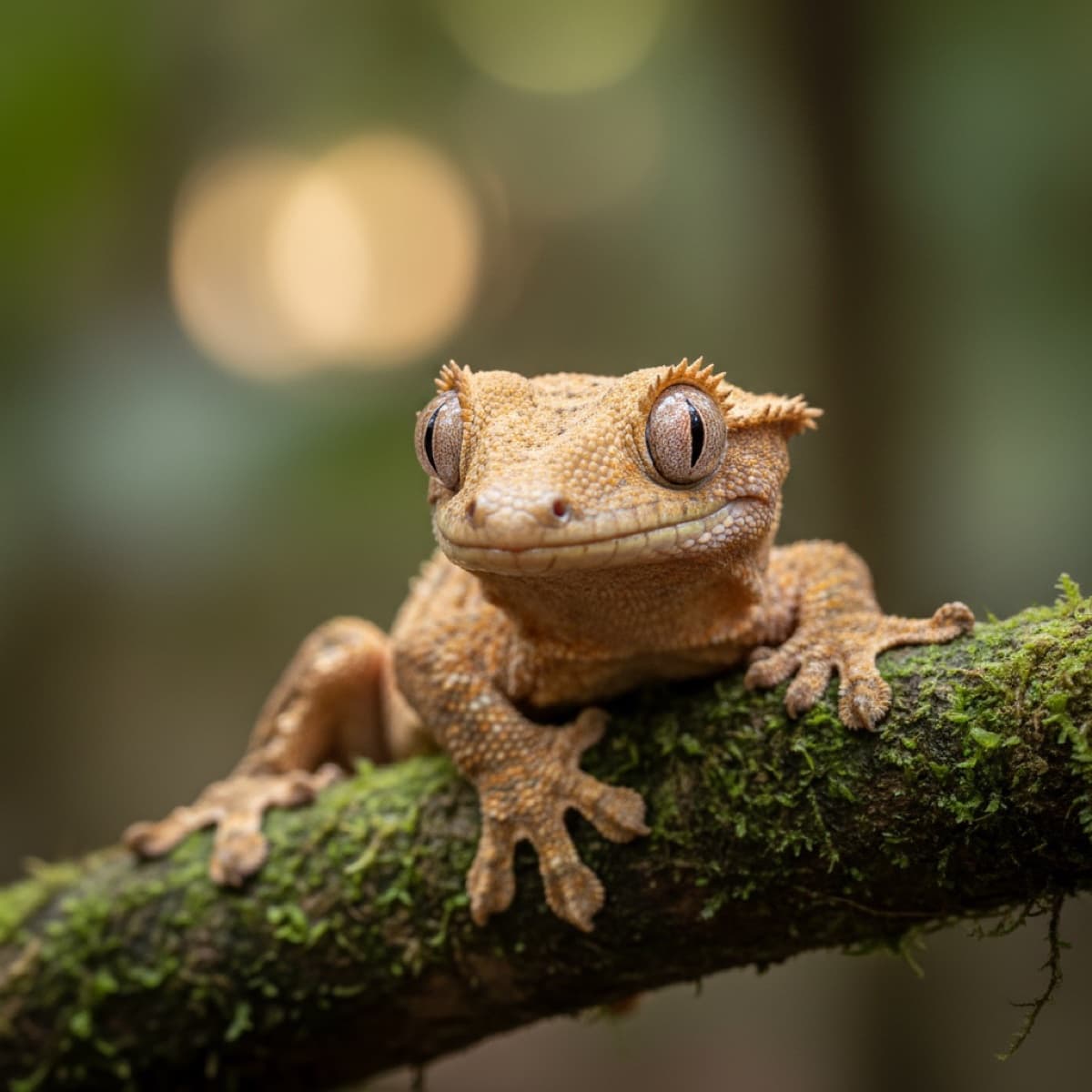
The crested gecko is one of the best beginner reptiles for UK keepers. Originally from New Caledonia, these small arboreal lizards thrive at room temperature, eat a convenient powdered diet, and require relatively modest enclosure setups. If you are considering your first reptile or looking for a low-maintenance exotic pet, the crested gecko (Correlophus ciliatus) deserves serious consideration.
This comprehensive UK care guide covers everything from enclosure setup and heating costs to diet, handling, health, and where to find specialist vets. All advice follows RSPCA and Royal Veterinary College guidelines, with UK-specific costs and supplier information throughout.
Quick Answer
Quick Answer: Crested geckos are beginner-friendly reptiles costing £40-£300 to buy, £150-£350 for initial setup, and £15-£25/month to maintain. They need a tall vivarium (45×45×60cm minimum), 22-26°C temperatures, 60-80% humidity, and a powdered diet — no live food required. No licence needed in the UK. Find an exotic vet near you →
BritExotics kit listAD
Skip the 40 open tabs.
The complete crested gecko setup — correct wattages, °C thermostats, UK stock — priced, vetted and on one list. Checked July 2026.
See the full UK kit list →Or browse every BritExotics starter kit — 8 species and counting — on our Amazon storefront →
📋 Table of Contents
- Why Crested Geckos Are Ideal for UK Keepers
- Enclosure Setup and Size Requirements
- Temperature and Heating in the UK Climate
- Humidity and Misting
- Lighting and UVB
- Diet and Feeding Schedule
- Handling and Temperament
- Health and Common Issues
- UK Cost Breakdown (2026)
- Legal Status in the UK
- Where to Buy Crested Geckos in the UK
- Frequently Asked Questions
Why Crested Geckos Are Ideal for UK Keepers
Crested geckos (Correlophus ciliatus) were thought extinct until rediscovered in New Caledonia in 1994. Since then, they have become one of the UK's most popular pet reptiles — and with good reason.
Key advantages for UK owners:
- Room temperature friendly: They thrive at 22-26°C, which many UK homes maintain naturally for much of the year. This means significantly lower heating costs than species like bearded dragons.
- No live food required: Crested geckos can live entirely on a powdered complete diet mixed with water. This is a major selling point for keepers who are squeamish about handling live insects.
- Compact enclosure: A vertical vivarium takes up less floor space than a horizontal setup.
- Long lifespan: 15-20 years with proper care, giving you a genuine long-term companion.
- Beginner-friendly: Rated as a beginner species by the RSPCA and most UK reptile specialists.
However, crested geckos are not zero-maintenance. They need consistent humidity (60-80%), a properly set up vivarium, and regular misting. They are also nocturnal/crepuscular, so you will see most activity in the evening and at night.
If you are comparing beginner reptiles, see our guide to the best first exotic pet for UK beginners. For a different gecko option, explore leopard gecko care.
Enclosure Setup and Size Requirements
Crested geckos are arboreal — they climb rather than walk. This means they need a tall vivarium, not a long one. This is the most important distinction from terrestrial reptiles like leopard geckos.
Minimum enclosure sizes:
- Juvenile (under 6 months): 30×30×45cm — smaller spaces help them find food easily
- Sub-adult (6-12 months): 45×45×60cm
- Adult (12+ months): 60×45×90cm (recommended) or 45×45×60cm (absolute minimum)
🛒 Shop Crested Gecko Vivariums on Amazon UK
Glass vs mesh vivariums:
Glass terrariums with front-opening doors (such as Exo Terra or ReptiZoo) are the best choice for UK keepers because they retain humidity far better than mesh enclosures. The UK's naturally drier indoor air (especially with central heating) makes humidity control a challenge with screen-top enclosures.
Essential decor and furnishings:
- Climbing branches — cork bark, bamboo poles, or manzanita branches
- Live or artificial plants — pothos, bromeliads, and ficus provide cover and boost humidity
- Feeding ledge — mounted high in the enclosure where geckos naturally feed
- Hides — at least two: one high, one low
- Substrate — coconut fibre (coir), bioactive soil mix, or paper towels for juveniles
🛒 Shop Cork Bark Branches on Amazon UK
🛒 Shop Coconut Fibre Substrate on Amazon UK
A bioactive setup using live plants, springtails, and isopods creates a self-cleaning ecosystem that many UK keepers find reduces long-term maintenance.
Temperature and Heating in the UK Climate
One of the biggest advantages of crested geckos for UK keepers is their modest temperature requirements.
Target temperatures:
- Daytime warm end: 24-26°C
- Daytime cool end: 20-22°C
- Night drop: 18-21°C
Critical: Temperatures above 29°C are dangerous and can be lethal. During UK heatwaves (increasingly common), you may need to actively cool the vivarium rather than heat it. Move the enclosure away from direct sunlight and use a small fan to circulate air.
Heating in winter:
From October to March, most UK homes with central heating will keep rooms above 18°C. If your house drops below this at night, consider:
- A low-wattage ceramic heat emitter (25-50W) connected to a thermostat — never use a heat source without a thermostat
- A heat mat on the side of the vivarium (not underneath for arboreal species)
🛒 Shop Ceramic Heat Emitters on Amazon UK
🛒 Shop Reptile Thermostats on Amazon UK
Always monitor temperatures with a digital thermometer/hygrometer placed at both the warm and cool ends of the vivarium. Dial thermometers are inaccurate — invest in digital.
🛒 Shop Digital Thermometer-Hygrometers on Amazon UK
For a detailed breakdown of reptile electricity costs, see our guide to reptile heating costs in the UK.
Humidity and Misting
Humidity is the single most important environmental factor for crested gecko health. Getting this wrong is the most common cause of health issues in UK-kept cresties.
Target humidity:
- Daytime: 50-60% (allow some drying out)
- Evening/night: 70-80% (after misting)
- Never below 40% for extended periods
How to maintain humidity in UK homes:
- Hand misting with a pressure spray bottle — mist heavily in the evening and lightly in the morning. Your gecko will drink water droplets from leaves and glass.
- Automatic misting systems — worthwhile if you travel or find manual misting difficult.
- Live plants — pothos, ferns, and bromeliads naturally increase ambient humidity.
- Substrate choice — coconut coir retains moisture well without going mouldy.
- Partial glass top — if using a screen-top enclosure, cover 50-75% with glass or cling film to trap moisture.
🛒 Shop Reptile Misting Bottles on Amazon UK
UK winter challenge: Central heating dries indoor air significantly. You may need to mist 2-3 times daily from November to March. A room humidifier near (not in) the vivarium can help stabilise ambient humidity.
Important Warning
Warning: Standing water in the vivarium promotes bacterial growth and can cause respiratory infections. Mist, let the enclosure dry partially during the day, then mist again in the evening. Good ventilation is essential alongside humidity.
Lighting and UVB
Crested geckos are crepuscular (active at dawn and dusk) and were historically kept without UVB lighting. However, modern guidance from the Royal Veterinary College and the RSPCA now recommends low-level UVB for improved calcium metabolism and overall welfare.
Recommended lighting setup:
- UVB tube: 2-5% shade-dwelling T8 or compact UVB (e.g., Arcadia ShadeDweller or Zoo Med 5.0 Mini Compact)
- Photoperiod: 12 hours on, 12 hours off (use a timer)
- Placement: Ensure the gecko can choose to be within 15-20cm of the UVB source or retreat away from it
🛒 Shop Arcadia ShadeDweller UVB on Amazon UK
LED ambient lighting can supplement the UVB to create a natural day-night cycle, which benefits your gecko's circadian rhythm. Avoid strong, bright lighting — crested geckos prefer dim conditions.
Diet and Feeding Schedule
Diet is where crested geckos truly shine as beginner pets. Unlike most reptiles, they can thrive on a complete powdered diet mixed with water — no live insects required.
Complete powdered diets (recommended brands):
- Pangea Crested Gecko Diet — widely considered the best. Multiple flavours available.
- Repashy Crested Gecko MRP — another excellent option with strong UK availability.
Mix the powder with water to a thick smoothie consistency and offer in an elevated feeding dish (ledge-mounted). Replace uneaten food every 24-48 hours.
🛒 Our pick — Komodo Crested Gecko Complete Diet (Amazon UK)
🛒 Shop Repashy Crested Gecko Food on Amazon UK
Live food (optional but beneficial):
Offering appropriately sized crickets or dubia roaches 1-2 times per week provides enrichment and extra protein. Always dust live insects with:
- Calcium powder (without D3) at every feeding
- Calcium with D3 once per week if no UVB is provided
- Multivitamin powder once per fortnight
🛒 Shop Calcium+D3 Supplement on Amazon UK
Feeding schedule:
- Juveniles (under 12 months): Powdered diet every day; insects 2-3 times per week
- Adults (12+ months): Powdered diet every other day; insects 1-2 times per week
Fresh water should always be available in a shallow dish, though most crested geckos prefer to drink water droplets from misting.
Handling and Temperament
Crested geckos are generally docile and tolerate handling well, making them suitable for older children and adults. However, there are important considerations.
Handling tips:
- Wait 2 weeks after bringing your gecko home before attempting to handle it — let it settle.
- Start with 5-minute sessions, building up to 10-15 minutes over a few weeks.
- Handle in the evening when your gecko is naturally more alert.
- Use a hand-walking technique — let the gecko walk from hand to hand rather than gripping it.
- Never grab the tail — crested geckos can drop their tails (autotomy) and they do not regrow. A tailless gecko is healthy but it is a permanent change.
Temperament notes:
Juveniles are typically jumpier and more flighty than adults. Adult crested geckos (18+ months) are usually calm and enjoy climbing on their keeper. Every gecko has a different personality — some love being held, others prefer to be left alone.
If you are new to reptile handling, our exotic vet directory can help you find a vet who offers husbandry consultations.
Health and Common Issues
With proper care, crested geckos are robust animals. However, UK keepers should watch for these common health issues:
1. Stuck shed (dysecdysis)
The most common problem, usually caused by low humidity. Signs include retained skin on toes, tail tip, or around the eyes. Prevention: maintain 60-80% humidity and provide a humid hide.
2. Metabolic bone disease (MBD)
Caused by insufficient calcium or vitamin D3. Signs include wobbly walking, soft jaw, and kinked tail. Prevention: calcium supplementation and low-level UVB lighting. See our comprehensive MBD prevention guide.
3. Dehydration
Especially common in UK winter when central heating dries the air. Signs include sunken eyes, wrinkled skin, and lethargy. Prevention: regular misting and a water dish.
4. Tail loss
While not a disease, tail loss from stress, rough handling, or being grabbed is permanent. Tailless crested geckos ("frog-butts") are perfectly healthy and can live a full life.
5. Respiratory infections
Caused by consistently poor ventilation with high humidity (stagnant, damp air). Signs include wheezing, mucus around the mouth, and open-mouth breathing. This requires immediate veterinary attention.
When to see a vet:
Any signs of lethargy, loss of appetite lasting more than 2 weeks, difficulty shedding, breathing issues, or visible injuries warrant a visit to an exotic vet. Register with a listed exotic vet before you need one — emergencies happen.
For after-hours emergencies, use our emergency veterinary contacts.
UK Cost Breakdown (2026)
Understanding the full cost of crested gecko ownership helps you budget properly. Here are realistic UK prices for 2026.
Initial setup costs:
Monthly running costs:
Annual veterinary costs: Budget £40-£60 for an annual checkup with an exotic vet. Emergency visits can cost £100-£300+. Find an exotic vet near you and register before you bring your gecko home. For more on vet costs, read our exotic vet cost guide.
Legal Status in the UK
Crested geckos are fully legal to keep in the UK with no licence or permit required.
- Dangerous Wild Animals Act 1976: Crested geckos are NOT listed. No DWA licence needed.
- CITES: Captive-bred crested geckos have no CITES restrictions for domestic ownership.
- Local councils: No local authority restrictions apply to crested geckos.
- Renting: Check your tenancy agreement — some landlords restrict pets, including reptiles.
For a full overview of UK exotic pet legislation, see our UK exotic pet legal guide. If you are interested in species that DO require a licence, read our DWA licence guide.
Under the Animal Welfare Act 2006, you have a legal duty to meet your crested gecko's five welfare needs: a suitable environment, a suitable diet, the ability to exhibit normal behaviour, being housed with or apart from other animals as appropriate, and protection from pain, suffering, injury, and disease.
Where to Buy Crested Geckos in the UK
Recommended sources:
- Specialist reptile breeders — the best option for healthy, well-socialised animals with known genetics. Look for breeders who provide a feeding record, hatch date, and photos of the parents.
- UK reptile expos — events like Kempton Park Reptile Expo and Doncaster Reptile Show have hundreds of breeders under one roof.
- Reptile rescue centres — consider adopting. Many crested geckos are surrendered by owners who underestimated the 15-20 year commitment.
- Reptile shops — buy from shops that keep their animals in proper conditions and can demonstrate health and feeding records.
What to look for in a healthy gecko:
- Alert, bright eyes
- Clean vent (no stuck faecal matter)
- Full, plump tail (though tailless geckos are healthy too)
- Active and responsive when gently touched
- No visible stuck shed
- Straight spine and limbs (no kinks suggesting MBD)
Red flags to avoid:
- Lethargy, sunken eyes, visible ribs
- Mucus around nostrils or mouth
- Keeper unable to tell you what diet the gecko eats
- Multiple sick-looking animals in the same enclosure
Always have a vet visit arranged within the first 2 weeks of ownership. Find a listed exotic vet in your area.
Frequently Asked Questions
Not sure what size enclosure you need?
See the right vivarium size for your crested gecko drawn to scale in 3D — minimum & recommended dimensions in cm & ft, plus a full UK kit list.
Open the free Vivarium Size Calculator →Frequently Asked Questions
How much does it cost to keep a crested gecko in the UK?
Do crested geckos need UVB lighting in the UK?
Can crested geckos eat only powdered food?
What temperature should a crested gecko vivarium be in the UK?
Do you need a licence for a crested gecko in the UK?
How long do crested geckos live as pets in the UK?
Your crested gecko could be with you for two decades. Give them the best start with a proper vivarium, consistent humidity, and a quality powdered diet. Find a listed exotic vet today and register before you need emergency help. For after-hours emergencies: emergency veterinary contacts.
More guides: Leopard Gecko Health Guide · Reptile MBD Prevention · Best First Exotic Pet UK
Find Exotic Vets & Resources
Related Guides
Written by: BritExotics Editorial Team
Updated April 6, 2026